The Follow-Up Question That Keeps a Story Moving
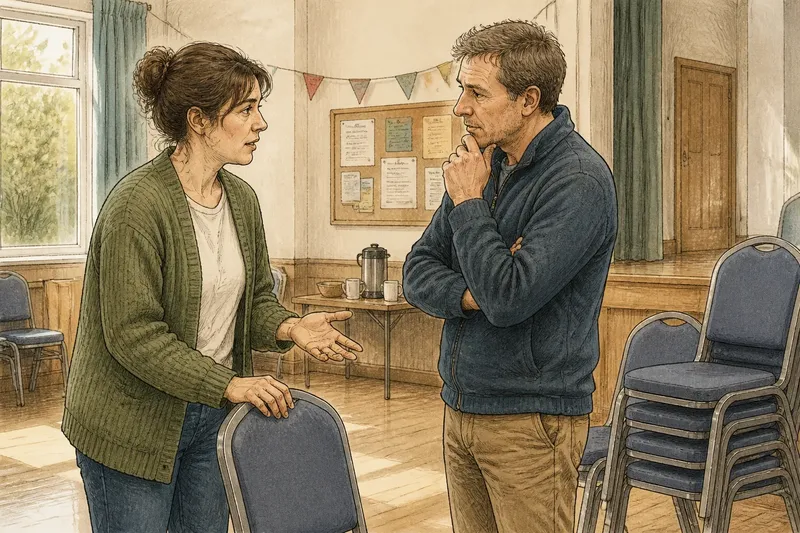
A follow-up question tied to the speaker’s last detail helps a story unfold naturally, without changing its subject or making the listener the main character.

At the kitchen table, a friend says the bus broke down on the way to a job interview. You could ask whether they got the job, but that leaps past the small scene they have just offered. A follow-up question—“What happened when the driver came back?”—keeps the story moving along its own track.
The useful habit is simple: notice one detail in the speaker’s last sentence, then ask about that detail. Across a week of ordinary conversations, you can practise doing this without turning talk into an interview. The aim is not to collect every fact. It is to make room for the speaker to decide what matters next.
What makes a follow-up question feel connected?
A connected question picks up something the other person has just said: a place, an action, a choice, a snag or a feeling. If someone says, “The allotment was a mess after the rain,” you might ask, “Which part took the longest to sort out?” The question stays with the allotment rather than swinging off to your own garden.
Think of the exchange as passing a parcel, not tossing a new ball into the room. The speaker has handed you a detail; your question shows you have received it and offers it back in a shape they can open. They can answer briefly, add a scene or choose another detail entirely.
Listen for the part that seems to carry energy. A slight pause, an amused aside or a phrase like “that was the strange bit” can signal where the story is alive. You do not need to diagnose the speaker’s feelings. Simply ask about the detail they chose to emphasise.
How can you practise over one ordinary week?
Use a light routine rather than a tally. You are practising attention, not trying to hit a quota of questions. Pick one conversation each day and try the day’s small focus; if it does not fit naturally, let the moment pass.
- Monday — catch a concrete detail. When someone mentions a place or object, ask about it: “What was the room like?” or “What did you use to fix it?” Keep the wording open enough for more than a yes or no.
- Tuesday — follow an action. If the speaker describes doing something, ask what happened next or what they decided. “How did you choose which route to take?” follows their action without suggesting that your preferred route would have been better.
- Wednesday — stay with the snag. When a story includes a problem, ask where it became difficult. “What part held things up?” invites detail; “Why didn’t you plan better?” turns the question into a verdict.
- Thursday — leave room for a feeling. If the speaker names an emotion, ask what brought it on: “What about the call was frustrating?” If they do not seem interested in discussing it, return to a practical detail or simply listen.
- Friday — follow a choice. Ask about a decision the speaker has already mentioned: “What made that option seem right at the time?” This can reveal the story’s turning point without asking the speaker to defend themselves.
- Saturday — notice the unexpected detail. If someone says a familiar outing took an odd turn, ask about the turn: “What surprised you when you got there?” Let their answer set the next direction.
- Sunday — give the story a little space. Ask one connected question, then allow a pause. The speaker may add more, change direction or signal that the story is finished. Each response is a useful cue.
Say you are chatting with a neighbour who mentions that their first attempt at making soup went wrong because the blender lid came loose. Rather than telling them about your own kitchen mishap, you might ask, “What did you do with the soup after that?” Their answer could lead to a funny clean-up story, a question about the recipe or a natural stopping point. The follow-up has opened a door, not chosen the room for them.
What can you ask when the story reaches a tricky turn?
Some details invite curiosity; others call for tact. If the speaker mentions a disagreement, private news or a painful moment, ask only about what they have made available. A gentle “Would you like to say more about what happened next?” gives them a clear choice. Avoid pressing for names, motives or intimate details they have not offered.
When you are unsure whether a detail is an invitation, make the question easy to decline. “You mentioned the meeting felt tense—what made it feel that way, if you’re happy to say?” is more considerate than demanding an explanation. If the answer is short or the speaker changes subject, follow their lead rather than rephrasing the same question.
Which follow-up questions help a story keep its shape?
What should I ask after someone mentions a place?
Ask what happened there, what the place was like or why it mattered to the story. A question such as “What was unusual about the station?” stays close to the detail without assuming the answer.
How do I avoid making a question sound like a challenge?
Use curious wording rather than asking the speaker to justify themselves. “What led you to that choice?” is usually more open than “Why would you do that?”
What if I cannot think of a follow-up straight away?
Wait for a beat and listen to the whole sentence before choosing a detail. If no natural question comes, a simple “What happened next?” can work when the speaker is clearly still telling the story.
How can I tell when to stop asking?
Notice whether the speaker is adding detail, giving brief replies or moving towards another subject. One well-placed follow-up is often enough; conversation should not feel like an interview.
How do you keep the question from taking over?
Keep your question shorter than the story you hope to hear. A long question packed with your guesses, advice and personal examples leaves the speaker little room to answer on their terms. Ask one thing, then listen for the next detail instead of preparing a second question while they speak.
It also helps to avoid smuggling in an explanation. “Was the delay because the manager forgot again?” supplies a culprit the speaker may not have named. “What caused the delay?” lets them describe what they know, or say they are not sure.
After a response, you can follow another detail if the story is still unfolding. You can also acknowledge what you heard and let the exchange breathe. The point of the follow-up question is not to keep someone talking indefinitely; it is to make their next choice of detail easier.
As you practise the follow-up question, keep one small check in mind: could the speaker answer it in their own direction? If the wording points to a detail they just gave and leaves room for a short reply, a longer story or a change of pace, it is likely to serve the conversation rather than steer it.