The Common-Ground Shortcut That Blurs a Real Difference
Learn how to name the point of difference before seeking common ground, so a difficult conversation stays honest without turning into a contest.

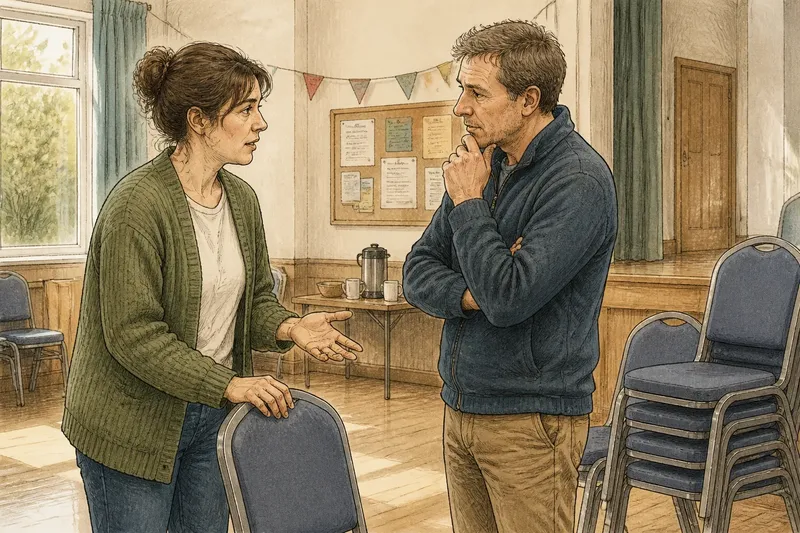
At the kitchen table, one sibling asks to keep the family holiday tradition; the other says they need a quiet day at home. “We both want everyone to feel welcome,” someone offers. It is a kind thought, but it does not name the decision in front of them. In a disagreement, common ground helps only after the actual difference is visible.
The useful work here is not finding a compromise or deciding who is right. It is making the disputed point precise enough that neither person has to argue against a caricature of their view. That clarity can make the next conversation more honest, even when the positions remain apart.
What exactly is the common-ground shortcut?
It is the move from disagreement to a broad shared value before either position has been properly described. “We both care about fairness” may be true, yet one person might mean applying the same rule to everyone while another means making allowances for different circumstances.
That shared word can become a lid if it is treated as a resolution. Instead, use it as an opening: “We both care about fairness, but seem to mean different things by it. What should a fair process account for here?” The question keeps the value in view without pretending that its meaning is settled.
How can you describe the difference without making it personal?
State the choice at issue, then describe each position in parallel language. “You prefer a planned garden layout; I’d rather residents add plants as they use the space” is clearer and less accusatory than “you want control and I want freedom”. One version identifies an option; the other assigns identities.
Give the other person a chance to correct your account. Try, “Have I understood what you’re asking for?” If they say you have not, listen for the revision rather than defending your first description. Accuracy is more useful than a polished summary that the other person rejects.
Also distinguish the practical proposal from the concern behind it. Someone asking for a fixed schedule may want predictability, not authority; someone asking for flexibility may be worried about an unexpected change, not avoiding responsibility. Ask what the preferred option is meant to address, and treat your answer as a question, not a diagnosis.
What does naming the difference sound like?
Is naming a disagreement the same as picking a fight?
No. A neutral account of the choice under dispute is less personal than a claim about someone’s motives. Keep your wording specific and invite correction.
What if we agree on a value but interpret it differently?
Name the value and ask what it means in the decision at hand. Shared language can guide the conversation, but it does not settle a difference in interpretation.
What if the other person will not explain their position?
Say what you understand about your own position and the difference you can see, then leave room for a response. If neither of you can continue constructively, agree whether to pause or return to the subject later.
When should you look for common ground?
After both positions have been described in terms the people holding them recognise. A shared aim can then help frame further questions, without turning into pressure to agree.
How can you check that your description is accurate?
Listen for the other person’s correction, and repeat the revised point in plain language. If they say, “It isn’t the fixed schedule I care about; I need to know changes in advance,” you can check: “So notice matters more than keeping the same arrangement every time?” Their answer tells you whether the disagreement has narrowed or whether another difference remains.
Try the same check on your own view. “I said I wanted flexibility, but I mean that an unexpected work shift can change what I can manage.” This kind of refinement is not a retreat. It gives both people a more accurate account of what they are discussing.
What does this look like in a real conversation?
Imagine two neighbours discussing a shared garden. In this invented situation, one starts by proposing a tidy planting plan; the other wants residents to choose plants as they go. They both say they care about the space, but that does not yet answer what should happen.
The first neighbour says, “I hear that you want room for residents to add plants, while I’d prefer us to agree on a layout first. Is that fair?” The second replies, “Mostly. I’m concerned that a fixed plan leaves no room for people to contribute.” The first checks, “So the main issue is making participation possible, rather than avoiding any plan?” Once the second confirms, they have a clearer description: one wants a shared layout, the other wants a meaningful way for residents to shape it. They have not agreed on a solution, but they no longer have to argue over whether either person cares about the garden.
That sequence is the point: name the practical difference, check the concern beneath it, and keep the account open to correction. Common ground may help later, but it should not be used to hurry someone past a disagreement they still need to explain.