A Closing Round for a Discussion Without a Neat Answer
A closing round gives an unresolved discussion a considerate ending, helping everyone leave with a clear sense of what they heard and what happens next.

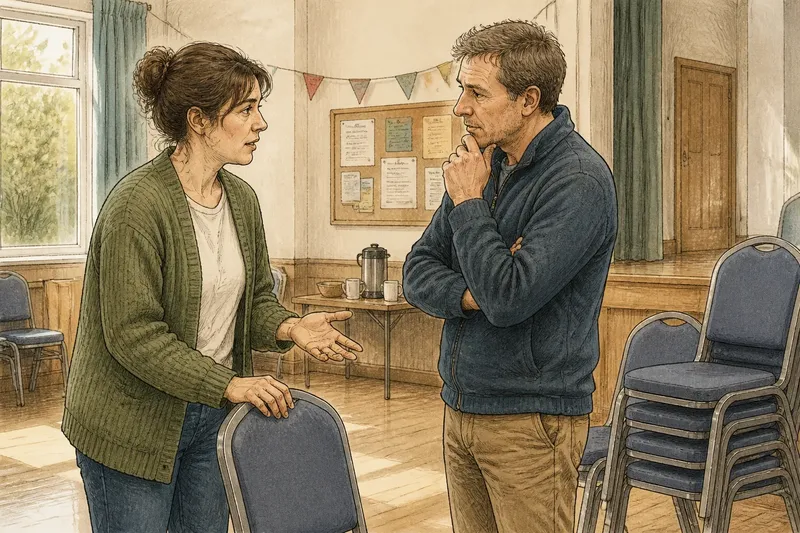
The chairs are being stacked, but the conversation about the community garden is still circling. A closing round gives an unresolved discussion a considerate ending: each person names one thought they are leaving with, then the group can turn its attention to the practical business of parting.
This small ritual is less about the subject under debate than the transition out of the room. It gives everyone a clear last turn, keeps the goodbye from becoming one more argument, and lets the facilitator close without pretending the discussion has reached a verdict.
What is a closing round for?
A discussion can end because the venue is closing, the meal is over or people have reached their limit for the evening. Those are ordinary reasons to stop, but an abrupt ending can leave participants unsure whether the conversation itself is over or simply paused.
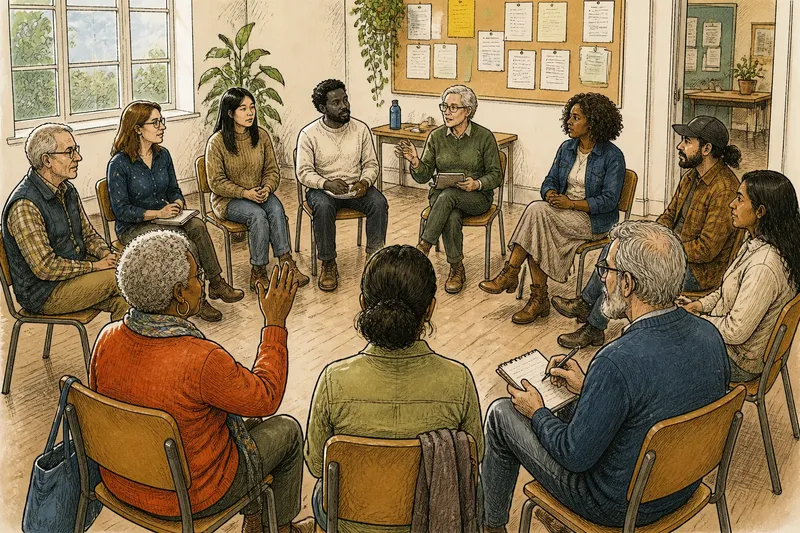
A closing round marks that boundary. Like returning a library book to its place on the shelf, it helps the group put away the current conversation without declaring the subject finished. The prompt is brief, and each person gets a chance to speak or pass.
How do you set up the last turn?
Explain the purpose before inviting anyone to speak. Try: “We need to finish for tonight. Let’s have one short turn each: name something you heard, a question you are carrying, or a thought you want to leave with. You can pass, and we won’t reply to each turn.”
Keep the invitation open rather than asking people to identify a lesson or a change of mind. Someone may mention an idea they found useful; someone else may simply say they need time to think. Neither response needs to be treated as a result.
Choose an order that feels natural: around a table, clockwise, or by inviting volunteers if the group is large. Set a light boundary such as “one sentence each” when time is tight. Apply it evenly, and do not call on someone unexpectedly if that could make speaking feel compulsory.
What if the closing round gets stuck?
What if someone starts another debate?
Bring the group back to the purpose: “I’m going to hold that point for another conversation; for this turn, what do you want to leave us with?” If the point needs follow-up, record it only with the group’s agreement.
What if someone has nothing to add?
Let them pass without asking them to explain. A quiet pause or a simple “pass” is a complete turn, not a failure to participate.
What if a speaker takes too long?
Interrupt gently and consistently: “I’m going to pause you so everyone has a turn. What’s the one thought you’d like to leave with us?” Avoid making an exception for the most confident or senior person in the room.
What if speaking aloud feels uncomfortable?
Offer a written option, such as a private note or a message in a shared document, and let people choose whether to read it aloud. In a group with a power imbalance, make passing genuinely acceptable and avoid asking anyone to disclose private feelings.
How can you make the round work in practice?
Keep the facilitator’s role simple: explain the prompt, make space for each turn and avoid commenting on what a person meant. A nod or a brief “thank you” is enough. A summary can wait; interpreting someone’s words on the spot may make them feel their contribution has been changed.
- Check the purpose: If the group needs a clear stopping point, invite one short final turn; if it needs to make a decision now, use an agreed decision process instead.
- Check the available time: If everyone can speak briefly, go round in order; if time is too tight, invite volunteers or end plainly rather than rushing people.
- Check the group’s comfort: If speaking aloud feels difficult, offer a written response; if even that feels exposing, make passing an ordinary option.
- Check the room’s power balance: If a manager, landlord or other authority figure is present, state clearly that no one has to speak; if that does not feel safe, skip the round.
- Check the prompt: If it invites reflection without demanding agreement, use it; if it sounds like a request for a lesson or a shared view, rephrase it.
- Check whether a follow-up is authorised: If the group has agreed on a next conversation, name it accurately; if not, do not imply that someone will arrange one.
Say you are facilitating an invented neighbourhood meeting about where to put a shared noticeboard. The group has discussed the entrance and the sheltered wall, but the building manager must confirm what is allowed. You have time for a brief round, and one resident is unsure about speaking in front of the manager. You explain that people may pass, invite each person to name one thought without replies, and do not press the quieter resident when they pass. One person says the sheltered wall would be easier to read; another says the entrance is more visible. You close by saying the location is still undecided and that no follow-up has yet been agreed. The result is a clear end to the meeting, not a claim that anyone has settled the choice.
What should you say after the round?
Thank the group and state only what is known about the next contact. If another meeting is already arranged, mention it; if no follow-up has been agreed, say that plainly. This small distinction prevents a courteous ending from sounding like a promise.
Then stop. Resist adding a verdict, a long recap or a final invitation to respond. The useful finish is the one that makes the transition clear: people have had a last turn, the meeting is over, and the facilitator has not spoken on their behalf.
A closing round is at its best when it is a short, optional way to leave a conversation well. For a closing round to work, the prompt should fit the group, the right to pass should be real, and the final words should describe only what has actually been agreed.